-
Risk awareness is one of the largest challenges for any person venturing into the financial markets. Most traders do not fail because they do not know how to manage their exposures and decision-making; they do not fail because they do not know the market. It is here that applied theories such as the 3 5 7 rule apply.
The 3 5 7 rule of trading is an easy but effective principle that makes traders manage the risk, be disciplined, and have a clear picture of the market. And regardless of whether you are a forex trader or a leveraged market explorer, this principle will provide you with a rational framework that will allow you to remain consistent and become sustainable over time.
What is the 3 5 7 Rule in Trading?
The 3 5 7 rule is a trading discipline framework to help traders manage risk, exposure, and expectations. It does not solely focus on entries, but rather points out how much to risk, by the number of positions to hold, and the number of times to trade. The rule is generally employed in discretionary trading and is very much liked in the forex market because it moves very fast.
In simple terms, the 3 5 7 rule outlines three core limits:
- 3% of the maximum risk in a single trade.
- 5% of the total risk exposure at any point in time.
- 7% of the maximum risk across the correlated positions or over the defined trading period.
If the traders abide by these limitations, the first thing they achieve is to secure their capital, all other things being equal. The structured way of doing it is also what makes the rule perfect for market takers of any level.
The Core Philosophy Behind the 3 5 7 Rule
The 3-5-7 rule in trading revolves around survival first, profits second. Trading environments are volatile, but even the most effective techniques will at times suffer losses. The rule encourages traders to accept losses as part of the process, while at the same time, it ensures that the impact of a single mistake is minimal on their account.
The idea is very much in line with professional forex risk management strategies that put consistency and capital preservation ahead of aggressive returns. Traders who use this rule do not try to catch every opportunity but, instead, concentrate on high-quality setups and controlled exposure.
Breaking Down the 3 Percent Rule
The first element of the rule is about individual trades. It basically means a trader should not risk more than 3 percent of their total trading capital on one transaction.
As an example, in the case where your account balance is 10,000, the largest loss allowed on one trade would be 300. This comprises stop-loss placement and position sizing. Limiting per-trade risk is one of the ways traders protect themselves from emotional decision-making and sudden market swings.
This method is very instrumental in leverage trading, where amplified positions can result in losses getting quickly magnified.
Understanding the 5 Percent Total Exposure Rule
The second layer of the 3 5 7 rule in trading conveys the message about overall exposure. Even if the trades are well-managed from the inside, holding too many positions simultaneously can increase the risk.
The 5 percent rule means that the aggregate risk of all open positions should not be more than 5 percent of the account balance. Thus, a trader who abides by this rule would avoid overtrading and keep the mental discipline of the trading plan.
Say you have two trades open that risk 2.5 percent each. You have, therefore, already reached your maximum exposure. This leads to the principle of being selective and also better planning of trades, especially when dealing with several currency pairs.
The Importance of the 7 Percent Correlation Rule
The last part of the rule is seldom considered, but it is very crucial. The 7 percent rule is applied when the trades are correlated or have cumulative risk in a short time horizon.
In forex trading, a high number of currency pairs fluctuate with each other. In our case, EUR USD and other pairs that are based on USD could respond in the same way to major economic news. The 7 percent limit also makes sure that the traders do not expose themselves to the same market driver unknowingly.
Capping of correlated risk allows traders to stem the effects of market volatility in the forex markets and reduces the impact of concentrated losses due to high impacts.
Why the 3-5-7 Rule Works So Well in Forex
The forex market is characterized by its high liquidity, leverage, and fast price changes. As a result, risk management becomes a necessity. The 3-5-7 rule in forex defines an explicit adaptable framework for such situations.
Financial instruments can experience abrupt volatility, especially when it comes to economic data, decisions of central banks, or geopolitical developments. Keeping abreast of this rule allows traders to be continuously involved in the market while at the same time they avoid exposing their accounts to large losses.
Moreover, it allows traders to better control their margin leverage, thus making sure that the use of borrowed capital does not turn out to be a disadvantage.
Applying the 3 5 7 Rule in Real Trading Scenarios
One can figure out how the rule operates in a trading environment by taking a trader with a $20,000 account as an example.
- Max risk per trade: 600
- Max allowed total exposure: 1,000
- Max correlated risk: 1,400
Say the trader invested in EUR USD and the risk is 600. This means that he can at most risk another 400 from the second trade before getting to the total exposure limit. Now, if both the trades are affected by the same market factor, the trader must ascertain that the combined risk does not go beyond 7%.
Such a thoroughly organized plan eases the management of trades and decision-making, which in turn eliminates guesses from the process.
How the Rule Supports Emotional Discipline
The implementation of the 3-5-7 rule in trading has a profound and positive impact on the trader’s psychology, which is one of the biggest advantages that can be attributed to it. Traders, by deciding on the limits beforehand, substantially lessen the emotional pressure and the likelihood of impulsive moves.
First, losses are easier to handle, and then, more and more traders get convinced that confidence improves since decisions are not made under the influence of fear or greed but follow certain predetermined rules. Over time, discipline results in better consistency and improved performance.
The rule also limits revenge trading, which is often a major reason for significant losses.
Common Mistakes Traders Make With the 3 5 7 Rule
Though having a simple structure, the wrong use of the rule may hardly be effective. The most common errors are: not taking into account the correlation between currency pairs, changing risk limits after losing, and incorrectly understanding the leverage effect.
Besides that, some traders confuse position size with the percentage of risk. It is very important to work out the risk based on the distance to the stop-loss, not only on the size of the trade.
Sticking to the rule consistently is key to seeing long-term benefits.
Modify the Rule to Fit Your Trading Style
The 3 5 7 rule in a trading strategy is a versatile tool that can be used by traders of different styles. Day traders may implement a 7 percent limit on daily exposure, while swing traders might set this limit for a week.
Scalpers may use even smaller percentages while following the same rule. The main point of the rule is the same: set limits on risk, regulate exposure, and stay in control.
The flexibility of the rule allows it to be applied by traders of various experience levels.
The Role of Volatility and Market Conditions
Market conditions significantly influence how the rule is implemented. For instance, during periods of high volatility in forex market, traders may decide to further decrease their position sizes.
News about the economy, decisions on interest rates, and events happening worldwide can all be reasons for the prices to fluctuate more than usual. The 3-5-7 framework is like a compass through these times for traders not to lose sight of their strategy.
It obliges one to be patient and only take part when being certain during times of uncertainty.
Using the 3 5 7 Rule With Popular Currency Pairs
What makes the major pairs such as EUR USD attractive is, inter alia, their liquidity and lower spreads. But still, these pairs are not immune to sharp moves.
With the 3-5-7 rule, the exposure to major pairs can be kept at a minimum. Correlation risk, for instance, becomes very important when one is trading multiple USD-related pairs.
This method of consistent disciplined practice without internal/external pressure helps in achieving stress-free trading results.
How Professionals View the 3 5 7 Rule
Several professional traders operate under similar ideas, even though they may not necessarily refer to them as the 3 5 7 rule. The practices of limiting risk, managing exposure, and considering correlation are the norms of institutional trading.
This rule breaks down the concepts to be more manageable for the retail traders, thereby making it easier for them to practice professional-level discipline.
It serves as a bridge connecting theory with practical implementation.
Why Beginners Benefit Most From This Rule
For the newcomers in trading, the major problem would be to be able to stay in the game long enough so as to learn. The 3-5-7 rule is a sort of shield that guards beginners against huge losses while they are in the process of skill development.
That is to say, it offers a well-defined structure that alleviates the confusion and builds up the trader's confidence. As time goes by, beginners get to understand that they should put their trust in the method instead of impatience for quick results.
Thus, the rule can be considered an excellent starting point for long-term growth.
Conclusion
The 3-5-7 rule of trading is not merely a rule of risk but rather an attitude to trading that emphasizes discipline, organization, and sustainability. Through curtailing the risk of individual trades, overall exposure, and correlated positions, traders can find their way through the forex market with more confidence and visibility. Such a strategy perfectly fits the practices of professional risk management and helps make consistent decisions in the conditions of the dynamic market.
To develop a disciplined trading strategy and have a stable and controlled forex broker, such as CapitalXtend, if you need assistance, contact our professionals today and make a step towards smarter market entry.
FAQs
What is the 3 5 7 rule?
It is a risk management framework that limits trade risk, total exposure, and correlated positions.
Is the 3-5-7 rule suitable for beginners?
Yes, it helps beginners control losses and build disciplined trading habits.
Can the 3-5-7 rule be used in forex trading?
Yes, it is especially effective in forex due to leverage and volatility.
Does the rule guarantee profits?
No, it focuses on risk control, not guaranteed returns.
Can I adjust the percentages in the rule?
Yes, experienced traders may adapt it based on strategy and risk tolerance.
Is the rule useful during high volatility?
Yes, it helps manage exposure and reduce impact during volatile market conditions.

Breakout Trading Strategy: The Complete Guide
Most traders blow their first account within 90 days. Breakout trading is usually why. They spot EUR/USD breaking above 1.0850 after weeks of consol...

How do Interest Rates and Inflation Affect Forex?
Big moves in the forex market don’t happen randomly, they are often driven by key economic factors like interest rates and inflation. These fo...

Best Trading Tools & Resources Every Trader Should Use
Most traders don’t rely on guesswork anymore. They try to understand how the market is moving before making a decision. To achieve this, they...

Forex Market Hours: A Complete Guide to Trading Sessions
The forex market is open 24 hours a day, five days a week, which are its market hours. Within these hours, trading is divided into four major sessio...
What is a Stop-Loss Order? How to Protect Your Trades & Manage Risk
The financial markets can be unpredictable, with prices moving up and down quickly. Even the best strategies can face unexpected changes. In trading...

Support and Resistance Levels: The Ultimate Guide for Traders
When you trade in financial markets, you start seeing patterns. Price does not move up and down randomly but tends to react at certain levels. Somet...

Fundamental vs. Technical Analysis: Know the Difference!
Every trader, whether they’re placing their very first trade or managing a seasoned portfolio, starts with the same question: “Where...

Best Forex Pairs to Trade for Beginners 2026
The first time in the forex market may be daunting. There are hundreds of combinations that form a currency, and a beginner may be at a loss as to w...

Best Day Trading Platform for Beginners
Day trading is now one of the most interesting and thrilling methods of engaging in financial markets, particularly among novices who would want to...

Understanding Interest Rates in Forex Trading: A Guide for Beginners
The interest rate is one of the strongest variables that determine the price of the currency in the forex trade. Being a novice and wanting to learn...

7 Effective Forex Trading Strategies for 2025
In such a dynamic environment in the forex trading industry, a good strategy is...

Boost Your Algorithmic Trading Strategy with Forex VPS Hosting
Fast time is of the essence in the fast world of Forex trading, and more so when you are using an Algorithmic Trading Strategy to run your trades. T...

How do you create a Forex trading bot using ChatGPT?
The forex market is considered to be one of the most liquid and dynamic financial markets in the world. Traders are constantly seeking new means of...

How Economic News Affects Forex Trading?
Economic news is one of the factors that influences the exchange in the forex field. The economy-related events are carefully observed by the trader...
What is Price Action Trading in Forex?
Forex price action trading is the most respectable and time-tested trading strategy in all financial markets. Movement, candlestick patterns, and pr...

Advantages of Using the Best Regulated Brokers for Forex
In recent times, Forex trading has become an exciting way for people to access the global financial markets and benefit from currency movements to g...

The Future of Copy Trading with AI, Bots, and Next-Gen Strategies
Trading is experiencing rapid evolution from the use of new technology and newer techniques. Copy trading has been one of the leading forms of evolu...

AI in Forex Trading: The Benefits and Risks
Forex trading is a lively, fast-paced, worldwide market where technology is more and more important. Forex trading has greatly improved due to the i...

What is Latency? How Does Latency Impact Forex Trading?
Latency is one of those important considerations that are often not spoken about much in online Forex trading. It does not matter whether you are a...

How to Trade Forex Using Crypto
In this fast-evolving financial world, the coupling of crypto with traditional markets has spawned new trading avenues globally. One of the trendy a...

When is the Best Time to Trade the Forex Market?
The Forex market is a volatile global market operating around the clock for five days a week, with opportunity forever knocking on the door for any...

How to Trade Stocks with Leverage 1:5000
Stock trading has never been so simple, and traders now have time-tested methods and advanced technology to capitalize on trading profits. One of th...

Forex MT4 Robot: How to Create and Set Up
In today's fast-paced financial markets, you will find traders searching for tools that will meet their needs. Forex trading has some popular ap...

What is a Forex VPS? Benefits and How to Choose
In today’s era, speed and stability are key to making a potentially profitable trade in currencies. Virtually, a Forex VPS Hosting could be an...

What is Swing Trading in Forex?
Swing trading is an intermediate trading style, a compromise between day trading and longer-term investing. It involves holding onto positions from...

What is Spread in Forex Trading & How is it Calculated?
Forex trading is known as the largest financial market in the entire world and it is a marketplace for everyone who wants to make a potential profit...

What is Base and Quote Currency in Forex
Forex trading is a trading practice of global currencies through trading in pairs all over the world. When you engage in forex trading, you are deal...

Difference Between Copy Trading & Social Trading
In the world of online investing, copy trading, and social trading have emerged as powerful strategies, especially in the forex market. These method...

How to Manage Risk While Copy Trading?
Copy trading has become a popular method that enables traders to copy the transactions of skilled traders. For beginners, it can simplify trading an...

How to Stay Focused and Disciplined in Forex Trading?
In forex trading, there are vast opportunities for traders if they are focused and disciplined. Success in this dynamic market of changing currency...

Tips for Choosing the Right Brokerage Platform for Your Trading Needs
Investors at all levels of experience can find a lot of opportunities in the exciting world of finance. But choosing the right brokerage platform is...

What is a Currency Trading Platform?
Currency trading platforms are software systems that allow traders to participate in trading online currency. They give you a chance to view real-ti...

Exploring the Best Forex Trading Indicators
The use of indicators is crucial while forex trading. Many traders use these indicators daily to help them determine when to buy and sell in the cur...

Types of Hedges and Hedging Techniques
Hedging is like a financial strategy that financial backers should understand and use since it accompanies a lot of advantages. It acts as an invest...
Hedging in Forex Trading
Hedging is a strategic pillar of risk management in the complex world of trading, and understanding its nuances is paramount for any trader navigati...

A Guide to Starting a Hedge Fund and its Benefits
In today’s era, Hedge funds are one of the most well-known investment vehicles. They offer benefits for investors including the ability to pro...

What is Hedging? – An Ultimate Guide
The concept of hedging can be applied to a variety of investments like bonds, commodities, stocks, and currencies. Hedging typically involves the ut...
How to Trade Forex for Beginners
Welcome to the exciting world of Forex investments, where people can make a lot of money by swapping currencies all over the world. The

How to start forex trading?
Forex trading is an exciting market that offers tradable currencies the chance to react to changes quickly through a Forex trading platform. Forex i...
What is Volatility in Forex?
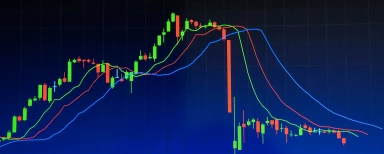
The term 'Volatility' in the context of forex is a measure of the fluctuation in the value of a currency pair over a specific period. It is...

Most Traded Currency Pairs in Forex Market
If we talk about currency pairs then it is imperative to say that their existence in the early 90s gave rise to an entire domain of trading. Nowaday...

Know the Difference between Forex Trading and Stock Trading
The forex trading and the stock trading, are two of the most popular markets for traders of assets. Making the right decision when choosing one of t...

All you need to know about Social Trading: Beginners Guide
Introduction: What is Social Trading? Trading is becoming more and more popular as people now turn to financial markets to provide them...

An Overview to Foreign Exchange Market
Introduction to Foreign Exchange Market The Forex Market (also known as the Forex, FX, or Currency Market) is the over-the-counter (OTC)...

Types of Forex Charts and How to Read
When it comes to trading, there are a lot of different charts that can be used. This article will teach you about the different types of charts and...

5 Profitable Forex Copy Trading Tips
If you're looking for investment alternatives with low-cost and low-risk that also have a higher chance of success rates and rewards, Forex

Know the Top Strategies to Trade Forex in 2022
When it comes to trading foreign currency, it is unquestionably essential to ensure that you have identified the most successful tactics overall. Ke...

Copy Trading Guide and its Advantages and Disadvantages
Getting inspired by colleagues or an expert trader and beginning with trading cryptocurrency sounds incredible. However, it's not that easy; tra...
A Complete Guide to Understand Forex Market!
What is Forex Trading? Forex is the settlement of transactions in any one currency for delivery of another. Its settlement system is ma...

Basic Forex Trading Terminologies Every Trader Should Know?
Trading and investing can be a complicated process. There is a plethora of terms to keep up with, and you need to understand what they mean in order...

Everything You Need to Know About Currency Pairs
What is a currency pair? A currency pair enables the comparison of two distinct currencies' values. Consider the existence of two d...

How Online Financial Trading Works?
How Online Financial Trading Works? With the advent of online financial trading, investors seem to have become more interested in financ...

Best Global Online Forex Broker
The largest and the most actively traded financial market is the foreign exchange market. When it comes to trading in the foreign exchange market, t...

Tips to Understand Online Financial Trading
Tips to Understand Online Financial Trading As in now, every individual wants to invest in some financial asset. Online financial tradin...

What Is Online Financial Trading?
What Is Online Financial Trading – Know the Advantage Investment has now become a lot easier thing than it used to be in earlier t...