-
In 2026, the way traders think about money, risk, and opportunity has clearly changed. Capital is no longer parked blindly. Risks are no longer taken without a strategy. Cryptocurrencies, once known mainly for hype and wild price swings, have finally grown up. And, after the 2024 Bitcoin halving, the crypto market has entered a more mature phase. Additionally, institutional players are active, regulations are clearer across major regions, and crypto is now widely seen as a serious asset class. However, it remains a volatile asset class.
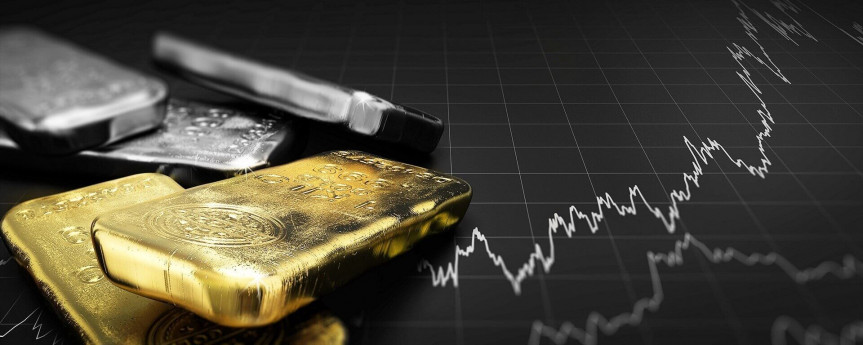
At the same time, something equally significant is happening in traditional financial markets. Central banks across Asia, the Middle East, and Eastern Europe have been steadily increasing their gold reserves. As a result, this move reinforces what gold has always represented. It is the stability during uncertainty and protection against long-term economic stress.
Because of this, the old debate of “digital gold vs physical gold” no longer fits today’s reality. In 2026, traders are no longer forced to choose one side. Instead, they are learning how to use both. Both crypto and gold react differently to liquidity shifts, inflation trends, and global tensions. This difference is precisely what makes them powerful together.
In this blog, we explore how both assets behave in 2026, where they fit into modern trading strategies, and how experienced traders use them together to manage risk and unlock opportunities.
The Evolution of Gold Trading in 2026
Gold’s importance in 2026 has nothing to do with tradition or sentiment. Instead, it is driven by real economic conditions. Inflation may have cooled in parts of the developed world. Still, rising government debt, currency pressure in emerging markets, and ongoing geopolitical uncertainty continue to support gold’s role as a reliable store of value.
Furthermore, central banks remain one of the strongest signals. Record gold purchases through 2025 and early 2026 have sent a clear message to markets that gold is once again a strategic reserve asset. It is not just a defensive hedge used in times of panic.
Online Gold Trading Trends
Gold trading itself has also evolved. In 2026, traders no longer need to own gold physically to benefit from gold price movements. Besides this, online gold trading has become faster, more liquid, and more accessible. Tight spreads, deep liquidity, and advanced execution allow traders to trade spot gold with precision and flexibility.
Institutional Influence on Retail Behavior
Generally, the markets pay attention when central banks accumulate gold. That visibility has changed how both retail and professional traders view gold. It is increasingly seen as a core portfolio asset rather than a passive holding. As a result, gold trading strategies in 2026 are more active, structured, and professionally managed than ever before.
The Evolution of Gold Trading in 2026
We are well aware of the 2024 Bitcoin halving. It was indeed a defining moment for crypto. So far in 2026, its long-term impact is clear. Reduced supply growth, combined with steady institutional inflows through ETFs, hedge funds, and sovereign wealth funds, has reshaped the market.
Crypto is no longer driven only by retail sentiment. It now reacts strongly to macroeconomic factors, including interest rate expectations, the strength of the dollar, and global liquidity conditions. This shift has made crypto markets more analytical and more familiar to professional traders.
While volatility has not disappeared, it has changed in nature. Price moves today are more structured and often tied to clear market drivers, making crypto easier for experienced participants to analyze.
What is Crypto Market Volatility?
Crypto volatility remains higher than that of traditional assets, but in 2026, it is far more orderly. Liquidity has improved, derivatives markets are deeper, and volatility often clusters around known events like economic data releases, regulatory updates, or significant capital flows.
For skilled traders, this volatility is not a weakness. It is an opportunity.
Regulation as a Market Stabilizer
Clearer regulations have played a significant role in crypto’s evolution. Frameworks like MiCA in Europe, along with stronger global compliance standards, have reduced uncertainty without killing innovation. Instead of slowing the market, regulation has helped professionalize it.
As a result, crypto trading in 2026 feels less speculative and far more strategy-driven.
Comparative Analysis: Risk, Reward, and Utility
When evaluating gold trading vs crypto, the distinction lies not in superiority but in their functional roles within a portfolio.
Basis Gold Trading Crypto Trading Market Maturity Centuries-old asset class with deeply established trust and valuation models. Post-halving maturity phase with growing institutional participation and refined market structure. Volatility Profile Low to moderate volatility. Price moves are gradual and macro-driven. High volatility, sharp intraday and multi-day swings remain common. Risk Characteristics Lower downside risk, acts as a capital preservation tool. Higher risk-reward profile, suited for aggressive growth strategies. Liquidity Depth Extremely deep liquidity. High liquidity in major pairs (BTC, ETH), variable in altcoins. Trading Hours Nearly 24-hour market with defined peak sessions. Accurate 24/7 market with constant price discovery. Inflation Hedge Utility Proven inflation hedge and safe-haven asset. Emerging inflation hedge, sensitive to liquidity and monetary policy. Regulatory Clarity Highly regulated and globally standardized. Improved clarity in 2026 due to MiCA and global compliance frameworks. Advanced Strategies for the 2026 Trader
In 2026, experienced traders focus on balance rather than prediction. They combine crypto’s growth potential with gold’s stability to navigate market cycles.
Many traders rotate profits from strong crypto moves into gold positions to lock in gains and reduce overall risk. Others use gold as a hedge when crypto markets cool down or consolidate, helping smooth portfolio performance.
Automation is also playing a bigger role. MT5 Expert Advisors are widely used to monitor correlations, manage exposure, and execute trades across both metals and digital assets. This allows traders to stay disciplined and responsive, even in fast-moving gold markets.
Why Smart Traders Choose CapitalXtend?
CapitalXtend allows traders to trade both gold and cryptocurrencies on a single, unified platform. Spot metals and crypto assets are available on MT4 and MT5, removing the need for multiple accounts or trading platforms.
Security and trust are key. CapitalXtend operates under FSC Mauritius regulation and provides a $1 million fund insurance framework to enhance trader confidence. With institutional-grade liquidity, ultra-fast execution, and spreads as low as 0.0, traders get professional conditions across both asset classes.
Add 24/7 market access and dedicated global support, and traders are equipped to perform in any market environment.
Trading the Future, Not the Narrative
In 2026, success is not about betting on a single asset. It’s about adapting. Gold provides the floor stability when markets turn uncertain. Crypto provides the ceiling growth in a digital-first financial world.
Smart traders understand that real performance comes from balance, strategy, and execution.
Start your 2026 trading journey with CapitalXtend. Open a demo or live account today and trade where smart capital moves.

Gold Trading Hours Explained: Best Time & Days to Trade Gold
Gold is traded globally and remains open for most of the week, which gives traders constant access to the market. Knowing the best time to trade gol...

What Commodities Trading Means for Investors
For a long time, trading commodities has played a key role in the global financial system. Commodities trading gives an investor some protection aga...
How To Profit From Gold and Silver Spot Trading?
In this blog, we will cover the basics of trading in gold and silver spots, concentrating on how best to make profits while avoiding losses. We will...

Gold Trading Strategies
Gold always attracts investors by offering opportunities for smart investments. Spot metal market lets you handle price swings in gold and make mone...
How to Trade Gold?
Gold has always held a special place for investors among the numerous options for investing. The context of trading gold is singular and fascinating...
How to Start Trading or Investing in Gold
Learn What is Gold Trading or Investing? The practice of buying and selling Gold stocks by speculating the market is called Gold Trading...
Different Ways to Buy and Invest in Gold
Dealing in precious metals like gold and silver has its own history across the globe since ages. There has been an increasing trend in such investme...

Best guide for Silver Trading in India
India has long history in dealing precious metals where people used to buy gold and silver for their social and economic growth. As the time changed...

5 Factors Affecting Gold Prices In India
5 Factors Affecting Gold Prices In India In India, gold is means far beyond its monetary value also India is one of the largest consumer...

How To Buy Silver In India?
How To Buy Silver In India? Investment in precious metals has a long history in India since the inception of civilization. Especially si...
Why Should You Logically Strategize Gold Trading?
Why Logically Strategize Gold Trading Gold has been around since the ancient civilization. It has also been a part of t...